Keloid Scars: Causes, Treatments, and Effective Removal Options

Introduction
Have you ever seen a raised scar that is hard, smooth, and usually grows beyond the wound area? These scars are called Keloid scars. They are also known as the overgrown scars and aren't harmful to the overall health.
However, a keloid may feel uncomfortable, itchy, or even painful at times. If a keloid develops over a shoulder or a joint, it can limit mobility and may cause discomfort while doing day-to-day activities.
Though keloids are not contagious, and not everyone who gets a scar will develop a keloid, people living with keloids often face discomfort and self-consciousness, and hence seek treatments such as keloid removal creams, ayurvedic treatment for keloids, laser treatment for keloids, and keloid injection.
In this blog, we will discuss all you need to know about keloids, right from what keloids are to when you should see a dermatologist for a keloid scar.
What Are Keloid Scars?
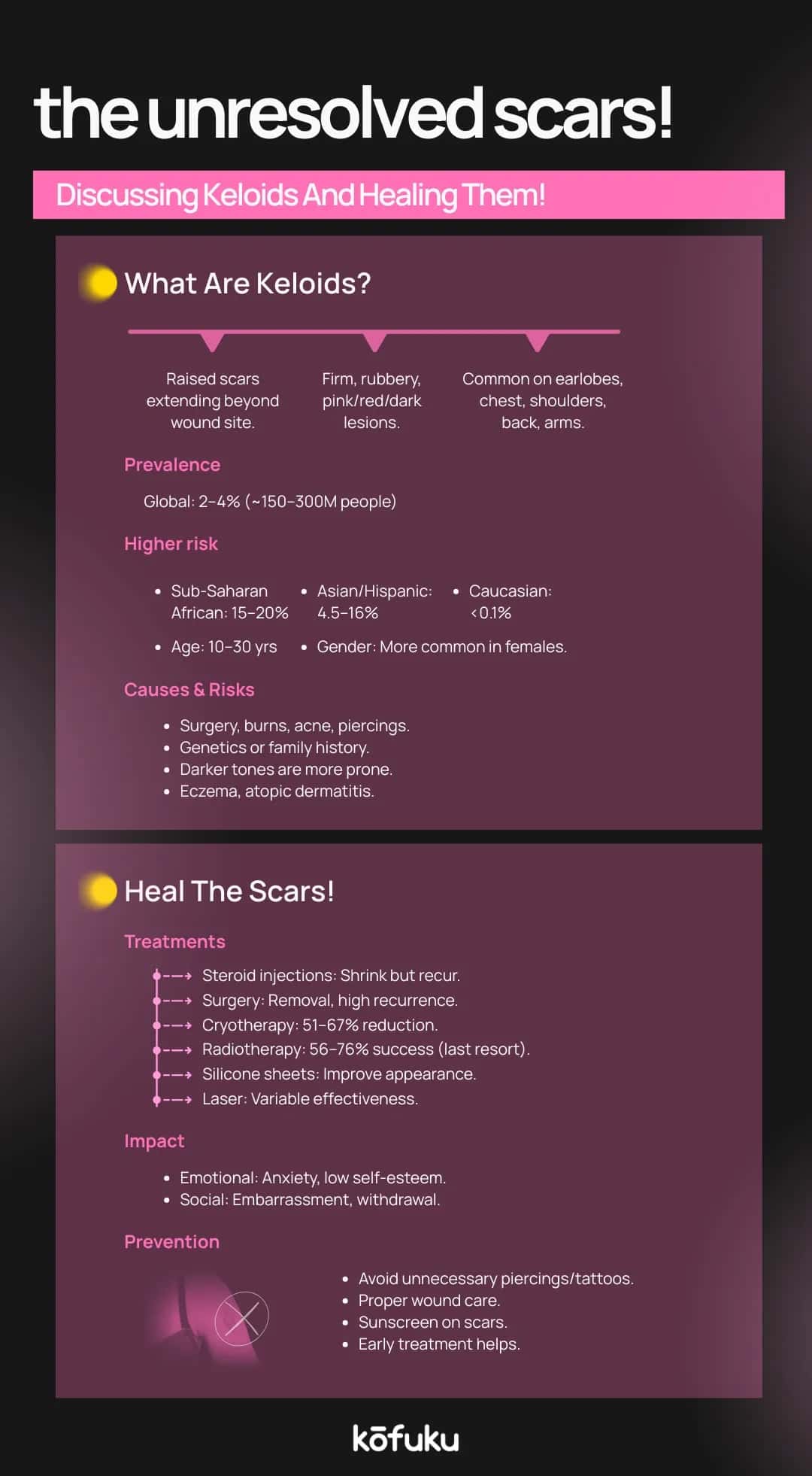
A keloid scar is a raised scar that grows larger than the wound that caused it. These scars tend to grow slowly and can take months to years to develop after a skin injury. Keloid scars can grow anywhere on your body; however, the most common places are:
- Abdomen
- Chest
- Back
- Ear
- Jaw
- Shoulder
Common Causes of Keloids
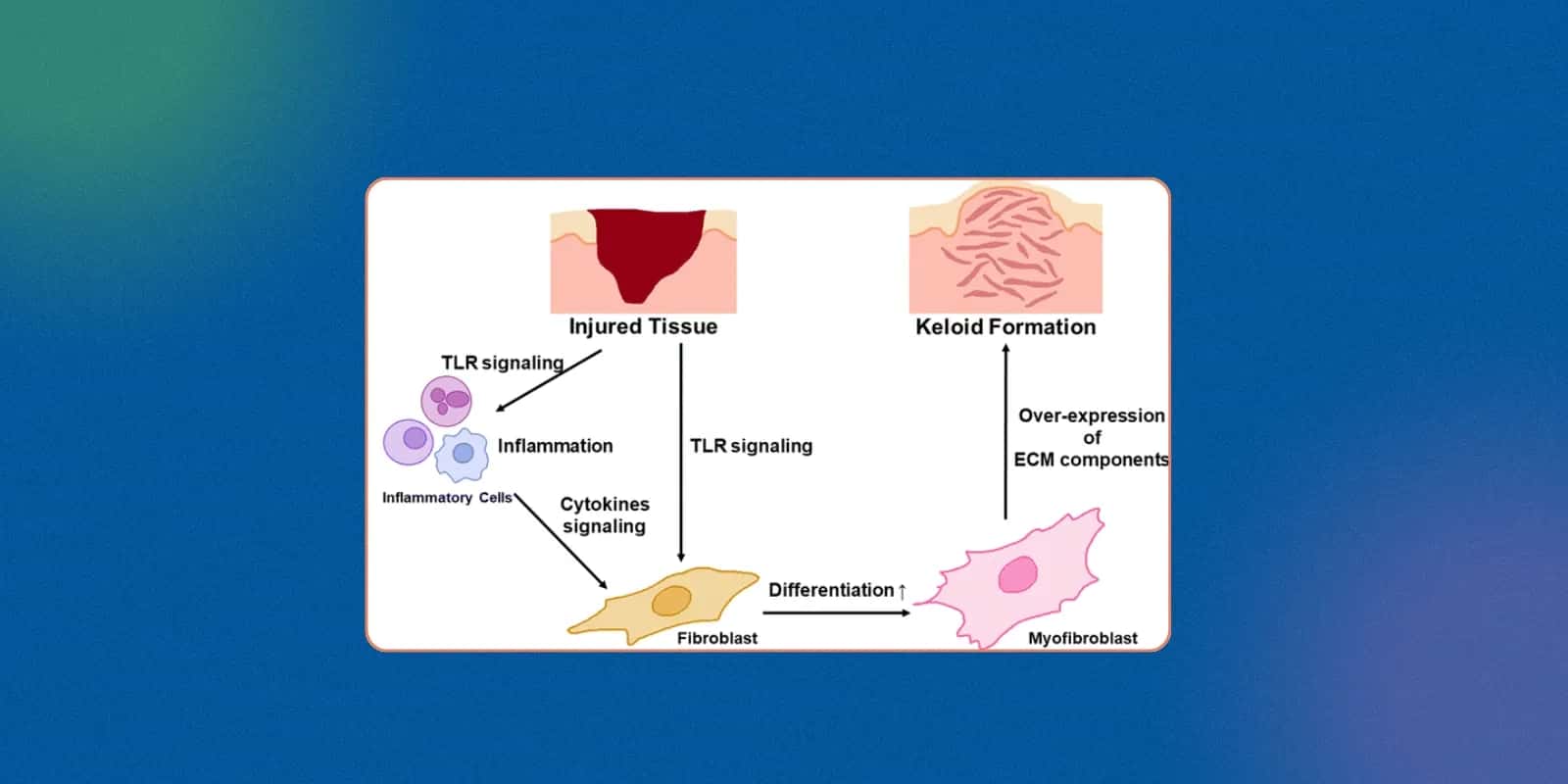
A keloid scar occurs when your body produces more collagen than it needs to heal an injury. Collagen is a protein that gives your skin support and strength. After an injury, collagen helps bring structure to the wound and aids in rebuilding your skin. But excess collagen production causes keloids. Here are some skin injuries or issues which may lead to keloids:
- Acne
- A bug bite
- Chikenpox
- Cut or burn
- A piercing tattoo
- Shaving
- A surgical incision
Though harmless, keloids come with some complications:
- Permanent skin darkening on the scar with sunlight exposure
- Pain that continues even when the scar stops growing
- Low self-esteem or social isolation due to changes in appearance
Keloid Scars from Nose Piercing
Keloids can happen after a piercing. Both sides of the nose, including the skin and cartilage around the area of the nose, may have keloids after nose piercing. Piercing keloid scars are usually non-painful and either itch or generally feel uncomfortable. You may also feel irritation when rubbed or touched.
To avoid this, get your piercings done by a professional and reputable piercer. You should also inquire about how to care for the piercing site and follow their advice and instructions to minimise the risk of local keloids after piercings.
Keloid Removal Cream Options
Even though creams aren't going to eliminate keloids, they do soften the appearance of the scar, decrease itching, and inhibit its tendency to thicken.
Popular types of keloid removal cream contain the following ingredients:
- Silicone: Hydrates and flattens scars
- Onion extract: Reduces scar tissue buildup
- Vitamin E: Improves skin elasticity
- Allantoin: Softens and smoothens scar texture
Best Ingredients in Keloid Cream
Silicone is a key ingredient in keloid cream formulas, combined with botanical extracts that hydrate and regulate collagen content. Repeated use within months can bring visible results in the appearance of the scars, at least, in newly developed keloids.
Keloid Scar Silicone Sheets
Silicone sheets are considered one of the gold-standard treatments for flattening keloids. They work by:
- Creating a protective barrier over the scar
- Hydrating the tissue to reduce collagen overproduction
- Gradually flattening and softening the scar
- They need to be worn for 12 to 24 hours daily over several months for visible results.
Keloid Injections for Scar Reduction
When topical treatments are not enough, keloid injections are often used.
Types of Keloid Injections
-
Corticosteroid injections: Reduce inflammation and collagen production
-
5-fluorouracil (5-FU): Disrupts scar tissue growth
-
Bleomycin: For severe, resistant keloids
Keloid Injection Side Effects
Side effects may include discolouration and thinning of the skin, as well as pain at the injection site, which subsides over time. The dermatologist will assist you in ascertaining the best treatment for a keloid according to the size, age, and location of the scar.
Ayurvedic Medicine for Keloids
Ayurveda sees keloids as a lack of balance in the healing process of the body, especially for Pitta and Kapha doshas.
Ayurvedic Treatment Process for Keloids
- Herbal pastes (containing turmeric, sandalwood, and neem) to reduce inflammation
- Keloid Ayurveda treatment massages with medicated oils to improve circulation
- Internal herbal remedies to detoxify and balance the body’s healing energy
Triphala, Aloe vera gel, and Gotu kola extract are popular ayurvedic remedies for keloids. Although the old keloids may not be fully removed, they will improve their appearance and prevent the formation of new ones.
Laser Treatment for Keloid Removal
Laser treatment of keloids is becoming increasingly popular for its precise treatment and virtually no downtime.
Types of Keloid Laser Treatments
- Pulsed dye laser (PDL): Targets blood vessels to reduce redness
- Fractional CO₂ laser: Improves texture and flattens the scar
- NdYAG laser: Suitable for darker skin tones
Keloid laser treatment is often combined with steroid injections for better results.
Comparing Keloid Treatment Options
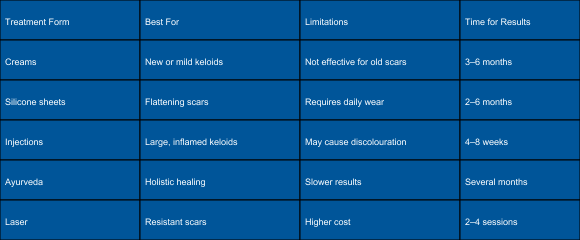
The timeframe for results may vary for individuals based on various factors, including age and size of the scar, and location.
Preventing Keloid Formation
If you are prone to keloids:
- Avoid unnecessary piercings and tattoos
- Keep wounds clean and moisturised
- Use silicone sheets early after surgery or injury
- Follow proper aftercare for nose piercings and cuts
When to See a Dermatologist for Keloid Scars
Seek medical advice if:
- Your keloid is growing rapidly
- It is painful, itchy, or bleeding
- You are considering cosmetic removal
- It affects your mobility or confidence
Conclusion and Takeaway
Keloid scars are not only an aesthetic problem, but can also impact your comfort, confidence, and quality of life. Fortunately, several remedies can be followed, including the application of keloid removal creams and silicone sheets, keloid injections, Ayurvedic remedies, and laser treatments.
The most appropriate way will depend on the age, size and location of the scar, and your preferences.
The most important factor in the treatment of keloids is early intervention, regardless of whether you opt for modern or Ayurvedic treatment. It is advisable to consult an experienced dermatologist to prevent the scar from worsening or developing new ones.
FAQs
Q. What is the fastest way to remove keloids?
A. The fastest keloid removal method is usually a combination of corticosteroid injections and laser therapy. This approach can reduce the size and flatten the scar within weeks, though complete removal is rare and requires multiple sessions.
Q. Does keloid removal cream really work?
A. Keloid removal creams help soften scar tissue, reduce itching, and improve colour over time. They work best on new or mild keloids but are less effective for large, older scars and should be combined with other treatments.
Q. How many keloid injections are needed for results?
A. Most patients need between three to six corticosteroid injections, spaced four to six weeks apart, to notice improvement. The exact number depends on the keloid’s size, thickness, location, and how it responds to treatment.
Q. Is Ayurvedic treatment effective for keloid scars?
A. Ayurvedic treatment can help reduce inflammation, soften scar tissue, and prevent new keloid growth through herbal remedies and oils. It works gradually, showing noticeable improvement over months, and is best for mild to moderate cases.
Q. Can laser treatment completely remove keloids?
A. Laser treatment can significantly flatten and lighten keloids, but it rarely removes them entirely. It works best when combined with injections or topical therapies, and multiple sessions are usually required for lasting improvement.
Q. How to prevent keloids after nose piercing?
A. To prevent keloids after a nose piercing, keep the area clean, avoid frequent jewellery changes, and reduce irritation. Applying silicone gel early and avoiding trauma can minimise the risk of abnormal scar tissue growth.
Q. Are silicone sheets effective for old keloid scars?
A. Silicone sheets can help soften and flatten old keloid scars, though results are slower than with newer scars. Consistent use for several months is essential, and combining with other treatments may enhance effectiveness.
Sliding Scale Insulin Therapy: Understanding Dosage Charts and Formulas for Safe Use

All About Idiopathic Pulmonary Fibrosis – Symptoms and Treatment

Diphtheria Treatment: Comprehensive Guide to Care and Recovery
Thunderclap Headaches: Causes, Symptoms, and Treatments

Effective Remedies for Wisdom Teeth Pain: Home Treatments That Work
