
Home
Blogs
Lifestyle Diseases
Understanding Chronic Sinusitis: Causes, Symptoms & Importance of Treatment
Understanding Chronic Sinusitis: Causes, Symptoms & Importance of Treatment


Introduction
Has it ever occurred to you why, when you have a stuffy nose or recurrent sinus infection, it simply will not clear up despite a week or more of antibiotics?
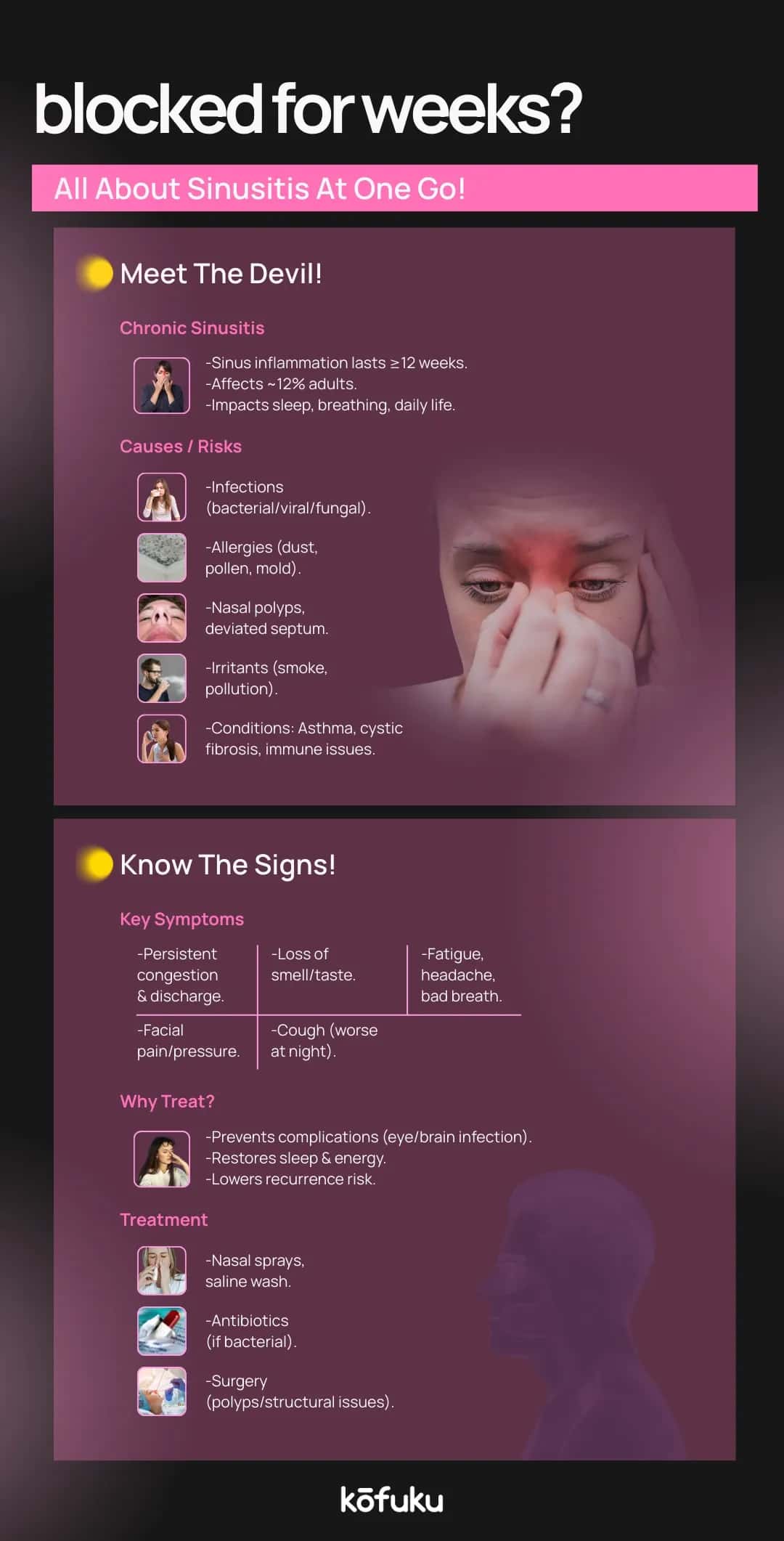
Common symptoms, such as a perpetual stuffy nose and headaches in India, are often attributed to seasonal allergies or pollution. Nevertheless, when such symptoms persist beyond 12 weeks, physicians tend to diagnose the condition as chronic sinusitis.
Without management, chronic sinusitis may cause severe impacts on quality of life, sleep, and productivity. To relieve the long-term problems, it is essential to understand what causes it, what the symptoms are, and how it can be treated.
How is Chronic Sinusitis Diagnosed? Examination of Sinuses and Tests
The process of diagnosis often begins with a detailed examination of the sinuses, conducted by a sinus doctor or an ENT specialist. They examine the medical history and symptoms, and can perform a nasal endoscopy to assess the presence of inflammation and blockages.
Imaging procedures like CT scans give a clear indication of sinus cavities, either showing thickened mucus linings, nasal polyps in them, or structural irregularities. Allergy testing can also be done to determine triggers. Early diagnosis can increase the chances of successful treatment and help prevent complications.
Effective Treatment Options for Chronic Sinusitis
Effective management depends on the condition of the underlying factor and the extent of symptoms. Although the low-severity cases can be cured using home treatments and over-the-counter medication, chronic sinusitis may need specialised medical attention.
Best Nasal Drops and Sprays for Sinusitis Relief
Nasal drops for sinusitis are used to alleviate nasal congestion by decreasing swollen nasal tissues. Saline nasal sprays are some of the methods for natural moisture and cleaning. Salinase and similar products are readily accessible, and the price of the Salinase nasal spray is both affordable and convenient.
Doctors might prescribe a sinusitis spray, which consists of corticosteroids, in case symptoms are worse. These sprays decrease inflammation and decongest a blocked nose. Selecting the best nasal drops for sinusitis should be based on whether the issue is infection-related, allergy-driven, or structural.

Suited Medicines for Sinusitis: Tablets and Others
Sinusitis medicine tablets are used to ease conditions where bacteria cause the infection to worsen. It can be relieved during short periods using antibiotics, antihistamines, or decongestants. More prolonged cases may require administering a sinusitis steroid to reduce swelling.
Nasal Drops for Sinusitis: Choosing the Best for Your Condition
Patients should consult their ENT doctor to find the best nasal drops for treating sinusitis. Saline-based options are safe for daily use, while medicated drops should only be used as prescribed. Long-term, over-the-counter decongestant drops may worsen nasal blockage, a condition known as rebound congestion.
Sinus Surgery: Procedure, Overview, and Recovery Time
In instances where the medicines and sprays do not work, the doctors might recommend an operation. Endoscopic sinus surgery is a common surgery to remove obstructions, polyps, or structural deformities. It is also the least invasive as small surgical tools open sinus passages.
Recovery generally takes about one to two weeks for daily activities, though complete healing inside the sinuses may take several months. Following post-surgical care instructions, like using saline sprays and avoiding strenuous activities, is crucial and can speed recovery.
Nursing Care Plan and Interventions for Sinusitis Patients
For hospitalised patients or those with severe sinus infections, a nursing care plan for sinusitis plays a key role. Nurses monitor symptoms, ensure correct medicine use, and provide patient education about lifestyle changes.
Sinusitis nursing interventions often include:
- Teaching patients proper use of nasal sprays and drops.
- Advising on steam inhalation to ease congestion.
- Monitoring for side effects of sinusitis steroid medications.
- Encouraging hydration and rest to support recovery.
Such interventions not only support healing but also help prevent relapses.

Using Saline Nasal Spray and Saline Drip at Home for Sinus Relief
One of the easiest and most helpful solutions to chronic sinusitis is the saline sprays. They act by cleansing out irritants, dilating the mucus, and making the nasal passages moist. The saline nasal spray price varies by brand but is usually cost-effective.
In more severe cases, patients may require a saline drip at home under medical supervision. This involves using a saline bottle for patients to maintain hydration and flush infections.
Role of Steroids and Creams in Managing Nasal and Sinus Infections
Sinusitis: Steroids in the form of sprays or tablets are prescribed to control the inflammation. When the infection may extend to parts of the skin around the nose, doctors may prescribe a cream for the infection in the nose. This helps reduce irritation, redness, and bacterial growth around the nostrils caused by frequent wiping or discharge.
FAQs
Q. What are the best treatment options for chronic sinusitis?
A. Chronic sinusitis treatment may include saline sprays, nasal drops, antibiotics, antihistamines, steroids, and, in severe cases, sinus surgery. Treatment choice depends on cause, severity, and medical evaluation.
Q. Which are the best nasal drops for sinusitis relief?
A. The best nasal drops for sinusitis relief include saline solutions for daily moisture and steroid-based drops for inflammation, prescribed by doctors. Choice depends on individual symptoms, infection type, and long-term safety.
Q. How long does it take to recover from sinus surgery?
A. Recovery after sinus surgery usually takes one to two weeks for daily activities, though complete healing may require months. Following post-surgery care instructions significantly improves recovery and outcomes.
Q. What medicines in tablet form are used for sinusitis?
A. Sinusitis medicines in tablet form may include antibiotics for bacterial infections, antihistamines for allergies, decongestants for congestion, and steroids for inflammation. These should always be taken only under medical supervision.
Q. How to use a saline nasal spray correctly, and what is its price?
A. Use a saline spray by gently inserting the nozzle into your nostril, spraying, and inhaling lightly. Prices vary, but commonly available brands remain affordable, making them a practical and accessible treatment.
Q. What does an examination of the sinuses involve?
A. Sinus examination includes reviewing symptoms, nasal endoscopy, physical inspection, and sometimes CT imaging. These help doctors identify inflammation, blockages, polyps, or infection, ensuring accurate diagnosis and personalised sinusitis treatment plans.
Q. What is the nursing care plan for chronic sinusitis patients?
A. The nursing care plan for sinusitis includes symptom monitoring, patient education on medicines, hydration, steam inhalation guidance, correct nasal spray use, and providing relief strategies to reduce discomfort.
Q. When are steroids prescribed for sinusitis treatment?
A. Steroids are prescribed for sinusitis when severe inflammation causes persistent swelling, blockage, or pain. They may be used in sprays or tablets under strict medical advice for short durations.
Q. Can creams help with infections inside the nose?
A. Yes, topical creams can help treat infections inside the nose by reducing irritation, redness, and bacterial growth. They are generally prescribed when sinusitis causes nasal skin irritation.

Thunderclap Headaches: Causes, Symptoms, and Treatments

Brain Cancer - Symptoms, Causes, Treatment and More

Chordoma - Causes, Symptoms, Treatment

Burnout: Everything You Need to Know About Its Causes

Fatty Liver in Women: Causes, Symptoms, and Stage-by-Stage Progression