
Home
Blogs
Wellness Corner
Understanding Typhoid Fever: Causes, Symptoms, and Importance of Prompt Treatment
Understanding Typhoid Fever: Causes, Symptoms, and Importance of Prompt Treatment


Introduction
There would likely be instances where you experience a high, persistent fever, fatigue, and abdominal pain, and you'd wonder what's causing it - a viral infection or something more? Typhoid fever is a common health issue in India, presenting with these symptoms, especially in areas where sanitation and water quality are not maintained.
Understanding typhoid fever, its causes, and how to manage it can help save lives and enhance recovery. This is because with early detection, proper diagnosis, and treatment are paramount to averting complications.
Typhoid fever is a disease that is caused by a bacterium, Salmonella Typhi, and is transmitted via contaminated water and food. Knowledge about tests for typhoid, medications to treat it, an ideal diet for recovery, and typhoid vaccinations can help patients and their caregivers effectively combat the disease.
This blog will help you understand what you need to know about diagnosis, treatment, recovery, and prevention of typhoid fever.
Tests for Typhoid: How Diagnosis Is Confirmed
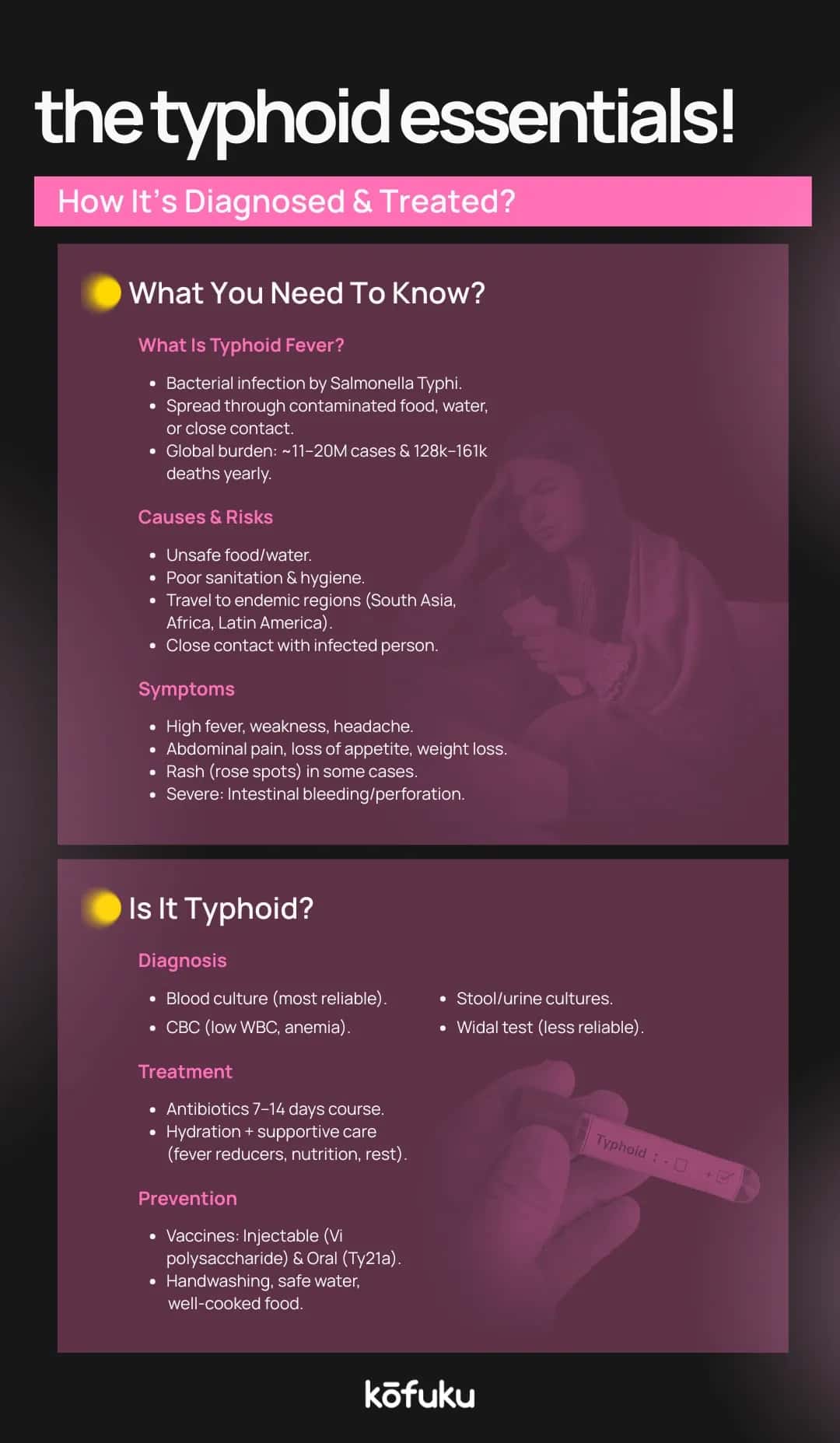
Typhoid fever is easily treated by early diagnosis. Clinical symptoms, combined with laboratory examinations, help physicians detect it early. They include, but are not limited to, the following:
-
Blood tests: Detect the presence of Salmonella Typhi antibodies or the bacteria themselves. The blood report for typhoid often confirms infection before other tests can.
-
Widal test: Measures antibodies against Salmonella Typhi. In this test for typhoid fever, a normal value indicates no infection, while deviations may suggest a positive case.
-
Stool and urine culture: This helps identify bacteria in excretions and monitor treatment progress.
Drugs for Typhoid: Choosing the Right Antibiotics for Effective Treatment
Antibiotic treatment is the key to typhoid recovery. The choice of drugs to treat typhoid should be determined by the medical professional, depending on the condition of the patient.
Common Drugs of Choice:
- Ceftriaxone: Often used in severe cases or resistant infections.
- Azithromycin: Effective in uncomplicated typhoid and outpatient settings.
- Ciprofloxacin: Previously a first-line option, now reserved due to resistance.
Typhoid Vaccine: Types, Availability, and Cost
Vaccination, especially for travellers and people living in endemic regions, is an option for the prevention of typhoid fever. There are two prime kinds.
- Injectable Vi polysaccharide vaccine: Single-dose, suitable for individuals above two years.
- Oral live attenuated vaccine: Taken in multiple doses, effective in children and adults.
Typhoid vaccine cost: Depending on the type of vaccine, place of treatment, and the medical facility, the price may vary. Vaccination can significantly decrease the incidence of typhoid fever and is advised, along with hygiene.

Diet for Typhoid Fever: What to Eat for Faster Recovery
Diet is essential for managing the immune system during typhoid fever. Here are some recommended foods:
- Soft, easily digestible foods: Rice, khichdi, and porridge.
- High-protein foods: Eggs, yoghurt, and legumes to support immunity.
- Hydrating fluids: Coconut water, clear soups, and oral rehydration solutions prevent dehydration.
Strength can be accentuated using light, healthy, low-fat, and hygienic foods to ensure the body fights infection effectively. Spicy, fried, and fatty foods should also be avoided.
Signs of Recovery from Typhoid Fever: What to Expect
Monitoring signs of typhoid helps in recovery and aids the patient and caregivers in understanding the effectiveness of treatment. Such common indicators of improvement are:
- Reduction in fever and fatigue.
- Improved appetite and digestion.
- Normalisation of bowel movements.
- Gradual return of energy and strength.
Regular follow-up with a typhoid specialist ensures continued improvement and complete recovery.
Managing Positive Typhoid Report: Next Steps and Specialist Consultation
A typhoid positive result can be stressful, but the response should be timely to ensure proper management of symptoms.
Here’s what to do:
-
Consult your doctor or specialist immediately: Early evaluation prevents complications.
-
Initiate prescribed antibiotics: Strictly adhere to the drugs for typhoid as advised.
-
Follow dietary recommendations: Support recovery with a suitable typhoid fever diet.
-
Monitor laboratory results: Repeat tests confirm bacterial clearance and guide therapy duration.
Close liaison with healthcare professionals is vital to managing symptoms, relapse, and total recovery.

Preventing Typhoid: Hygiene, Sanitation, and Vaccination Tips
Prevention is better than cure. Besides vaccination, it is most important to maintain good hygienic and safe food habits:
-
Wash your hands thoroughly before eating and after using the toilet.
-
Drink only boiled or filtered water.
-
Avoid street food and unpasteurised dairy products.
-
Maintain clean kitchens and utensils.
-
Educate family members about typhoid transmission.
Such a combination of steps, along with vaccination and knowledge concerning typhoid, can help you be better prepared and healthier. The awareness can also help reduce the instances of typhoid fever within the community.
FAQs
Q. What drugs are commonly used to treat typhoid fever?
A. Common drugs for typhoid include ceftriaxone, azithromycin, and sometimes ciprofloxacin. Selection depends on bacterial sensitivity, severity, and patient health. Proper adherence ensures effective recovery and prevents antibiotic resistance or relapse.
Q. What is the drug of choice in typhoid fever treatment?
A. The drug of choice in typhoid fever varies with local resistance patterns. Ceftriaxone and azithromycin are widely used for adults and children, providing effective bacterial clearance when administered as prescribed by a typhoid specialist.
Q. Which tests are best for confirming typhoid fever?
A. Accurate tests for typhoid include blood culture, Widal test, and stool or urine cultures. A positive typhoid report confirms infection, while repeated testing may monitor recovery or detect complications.
Q. How do I understand a positive typhoid report?
A. A typhoid positive report indicates the presence of Salmonella Typhi. Interpretation considers antibody levels or bacterial culture results. Your doctor or typhoid specialist guides treatment and follow-up to ensure complete recovery.
Q. What is the normal value in a typhoid fever laboratory test?
A. The normal value typically refers to the absence of Salmonella Typhi antibodies or negative cultures. Values outside the normal range may indicate infection, requiring prompt medical evaluation and antibiotic therapy.
Q. How much does a typhoid vaccine cost in India?
A. The typhoid vaccine cost in India ranges from approximately INR 200 to 1,500, depending on type, brand, and healthcare facility. Vaccination reduces infection risk and is recommended for children and travellers.
Q. What should I eat in typhoid fever for fast recovery?
A. Consume soft, easily digestible foods like rice, khichdi, soups, yoghurt, and boiled vegetables. Hydrating fluids and light proteins support healing, aligning with recommendations on what to eat in typhoid for fast recovery.
Q. What is the best diet plan during typhoid fever?
A. A typhoid fever diet should include light, nutrient-rich foods: rice, porridge, eggs, yoghurt, and boiled vegetables. Avoid fried, spicy, or processed foods to support immunity and facilitate faster recovery.

What Is Human Metapneumovirus? Learn More

Wetlands Virus: Is It the Next Big Thing After COVID-19?

Paracetamol Made Out of Coal Tar – How Safe Is It?

Lyme Disease: Symptoms, Causes, Diagnosis, Treatment

Understanding Hyperthyroidism: Causes, Symptoms, and Importance of Treatment